




Avoid hassles and extra fees by successfully
passing your HVAC/R exam
(Heating, Ventilation, Air Conditioning & Refrigeration), the first time!
(Heating, Ventilation, Air Conditioning & Refrigeration), the first time!
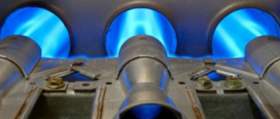
Gas Heating Certification - Gas Technician & Fitter
Becoming a certified NATE/ICE Gas Technician & Fitter requires training and the ability to effectively prepare and write the final certification examinations. This unique prep tool allows students to both test their acquired technical knowledge and practice writing a mock exam within the constraints of time.
Air Conditioning &
Refrigeration
NATE/ICE Certification
Our HVAC/R certification practice exams are designed to help students to prepare for any of the series tests administrated by NATE (North American Technician Excellence),
ESCO (Education Standards Corporation), ARI (Air Conditioning Refrigeration Institute), and the RSES (Refrigeration Service Engineers Society)
EPA 608 Certification
EPA Core Certification
The USA government requires all individuals who work
directly with controlled refrigerant to be certified.
All persons working and using refrigerants must be certified
by passing a EPA Section 608 examination. Students for
this test can be certified under three equipment categories:
Type I, Type II and Type III, plus Universal.WE CAN HELP YOU TO ACHIEVE YOUR SUCCESS!
If you're looking for a site where you can test and improve your knowledge before to take your HVACR (Heating, Ventilation, Air Conditioning and Refrigeration) certification, you came to the right place. You are at front of the best guide available for HVAC Technicians Certification practice exams. Our practice exams provide an excellent tool to help you master the topics and questions that most often appear on all HVACR (Heating, Ventilation, Air Conditioning and Refrigeration) certifications exams. Our HVACR practice exams are professionally structured by a team with many years of experience, not only in the HVACR (Heating, Ventilation, Air Conditioning and Refrigeration) industry but also as Colleges instructors
Our HVAC certification practice exams are designed to help students, technicians and professionals to prepare for any of the series administrated by NATE (North American Technician Excellence), ESCO (Education Standards Corporation), ARI (Air Conditioning Refrigeration Institute administrator of the ICE-Industry Competency Exam), and the RSES (Refrigeration Service Engineers Society) in USA and North America. Our HVAC Certification practice exams are designed to help students to improve scores in their certification in the following HVACR (Heating, Ventilation, Air Conditioning and Refrigeration) areas:
| Air Conditioning | EPA CORE | Gas Heating | ||
| Oil Heating | Air Distribution | HVAC Electrical | ||
| Hydronics | Commercial Refrigeration | Heat Pumps |
HVACR (Heating, Ventilation, Air Conditioning and Refrigeration) certification exams are very important in USA, if you want to increase your chances of gaining employment with a contractor who recognizes the value of technician certification. Contractors and employers in the country are realizing that hiring technicians who hold one or more certifications makes it easier to determine the real level of knowledge of the applicant, the expectations and also the level of salary to offer. The HVACR (Heating, Ventilation, Air Conditioning and Refrigeration) licenses nationally recognized allow a better parameter to make this evaluation and everyday more companies are requiring that contractors have only certified technicians.
Avoid the hassles and extra fees by successfully passing the exam the first time. Our Practice Exams are designed to specifically review and increase your knowledge !
Like any test, successfully passing your exam solely rests on how much effort you decide to put into preparing for it. In combination with your HVAC/HRAC course materials and notes, this practice mock exam has been prepared for the sole reason of helping you succeed. This test has been prepared in a way so completing it will adequately prepare you for the provincial exam. The questions, the difficulty, and the format are all in accordance to what you will encounter on the actual test. Your ability to practice as a licensed skilled technician rests on passing this test.
- Gas Heating Certification
- Gas Technician & FitterThe USA government requires all individuals who work directly with natural gas and propane to be certified. Our HVAC certification practice exams are designed to help students, technicians and professionals to prepare for any of the series administrated by NATE (North American Technician Excellence), ESCO (Education Standards Corporation), ARI (Air Conditioning Refrigeration Institute administrator of the ICE-Industry Competency Exam), and the RSES (Refrigeration Service Engineers Society). Our practice exams are designed to reinforce the learning and confidence for HVAC students, helping them pass the NATE/ICE certification exam the first time. Becoming a Certified HVAC Technician requires training and the ability to effectively prepare and write the final certification examinations. This unique prep tool allows students to both test their acquired technical knowledge and practice writing a mock exam within the constraints of time. These practice exams may be helpful to study for these NATE/ICE certification test: Gas Furnace Installation (GS-IN), Gas Furnace Service (GS-SV), Hydronics Gas - Installation (HG-IN), Hydronics Gas Service (HG-SV), Hydronics Oil - Installation (HO-IN), Hydronics Oil Service (HO-SV) and ARI-ICE.
- Air
Conditioning & Refrigeration / NATE/ICE CertificationThe USA government requires all individuals who work directly with controlled refrigerant to be certified. Our HVAC certification practice exams are designed to help students, technicians and professionals to prepare for any of the series administrated by NATE (North American Technician Excellence), ESCO (Education Standards Corporation), ARI (Air Conditioning Refrigeration Institute administrator of the ICE-Industry Competency Exam), and the RSES (Refrigeration Service Engineers Society). The questions selected for our practice exams are representative of the relevant topics covered and the most common questions in the actual NATE/ICE Certification license exams. The main topics covered in this set of practice exams are: Refrigeration Theory, Refrigeration Safety, General Safety Practices, Refrigeration Process and Components, Refrigerants, Lubricants, Compressors, Air Cooled Condensers, Water cooled Condensers, Evaporator coils, Metering Devices, Thermostatic Expansion Valves, Services Valves, Leak Detection, Recovery Equipment, Piping, Soldering & Brazing, Manifold Gauges, System Evacuation, Refrigerant Charging, Maths and Psychrometric charts. These questions will help you in your preparation to take the official license exam in the following certification NATE certification tests: Air Conditioning Installation (AC-IN), Air Conditioning Installation Service (AC-SV), Light Commercial Refrigeration Installation (RL-IN), Light Commercial Refrigeration Service (RL-SV), Commercial Refrigeration Installation (RC-IN), Commercial Refrigeration Service (RC-SV), Heat Pump Installation (HP-IN), Heat Pump Service (HP-SV) and ARI-ICE.
 - The EPA 608 certification in USA
A candidate for an HVACR license must first receive an appropriate education and training. Once a student for HVACR technician has completed the training, he is ready to surrender his license exam HVACR. We are committed to help you pass your EPA-608 and HVACR exams once, the first time! Nowdays, in USA and all over the world, the HVACR Technicians needs to obtain a legal certification in order to begin handling refrigerants. In USA, a HVACR Technician first needs to obtain a certification from the EPA (Environmental Protection Agency). This is because when refrigerants aren't used properly, they can cause damage to HVAC equipment, also causes serious environmental damage, or even lead to great injury and death of anyone close by.
HVAC/R license requirements by State
HVAC/R contractor license requirements vary by state, and there are different types of HVAC licenses available. As you progress through the levels, the requirements for each license become more demanding, with the HVAC master license having the most stringent criteria.
Some states have reciprocity agreements that let HVAC licenses be used across state lines, either fully or partially. Check with your local licensing department for details on your state's specific eligibility.
- Alabama: To work on HVAC systems in Alabama, you must obtain a Heating & Air Conditioning Contractors license from the Alabama Board of Heating, Air Conditioning & Refrigeration Contractors. Applicants need to submit proof of required work hours and pass an exam to earn their license
- Arizona: To work on HVAC projects over $1,000 in Arizona, technicians must be licensed by the Arizona Registrar of Contractors (ROC). There are three HVAC license classifications: Commercial C-39, Residential R-39 and Refrigeration Specialty Dual CR-39 Air Conditioning and Refrigeration. Each classification requires at least four years of experience and passing both the Statutes and Rules Exam and the relevant Trade Exam.
- California: In California, an HVAC license is needed for projects costing over $500. For such projects, a contractor's license from the Contractors State License Board is required. To obtain a C-20 contractor's license, technicians must gain the required experience under a licensed contractor, pass the licensing exam, and secure the necessary insurance and bonds.
- Colorado: Colorado does not require statewide HVAC licensing, but individual cities and counties have their own licensing regulations for HVAC work.
- Connecticut: To perform HVAC work, technicians must obtain their licenses from the state’s Department of Consumer Protection. For an apprentice HVAC license, individuals need to complete a 4-year apprenticeship program with training and hands-on experience. To qualify for a journeyman HVAC license, technicians must finish their apprenticeship and pass alicensing exam. To get a contractor HVAC license, technicians must have at least 2 years of journeyman experience and pass both a trade exam and a Business and Law exam. Journeyman and contractor licenses can be either limited or unlimited. A limited license restricts work to a specific area within the trade, while an unlimited license allows work across any area of the industry.
- Florida: To perform HVAC work in Florida, technicians must obtain a contractor license from the Department of Business and Professional Regulation. Florida offers two types of contractor licenses: registered and certified. A certified license allows you to work anywhere in the state, while a registered license limits you to the local area where it was issued. Both licenses have classifications for different system allowances. To obtain a certified contractor license, technicians must complete the required work experience and pass both a trade exam and a business and finance exam.
- Georgia: In Georgia, you need a contractor license from the State Construction Industry Licensing Board to perform HVAC work. There are two license classifications: Class 1 and Class 2. Class 1 is limited to systems with a maximum of 175,000 BTU of heating and 60,000 BTU of cooling, while Class 2 has no such restrictions. To obtain a contractor license, applicants must fulfill the required work experience and pass a licensing exam. Those seeking a Class 2 license must also provide proof of experience with systems exceeding 175,000 BTU of heating and 60,000 BTU of cooling.
- Illinois: Statewide licensing is not mandatory in Illinois.; check with your local jurisdiction for specific requirements in your area.
- Indiana: Statewide licensing is not mandatory in Indiana; check with your local jurisdiction for specific requirements in your area.
- Kentucky: To perform HVAC work in Kentucky, individuals must obtain a license from the Department of Housing, Building Construction. To qualify for an apprentice HVAC license, you must provide proof of work experience under a licensed master contractor. For a journeyman HVAC license, technicians need to complete two years of supervised work experience and pass a licensing exam. To obtain a master HVAC license, technicians must have at least two years of experience as a journeyman and pass the contractor licensing exam. Additionally, contractor applicants must show proof of the required insurance.
- Louisiana: In Louisiana, a contractor license is required for HVAC projects exceeding $10,000. To obtain a mechanical contractor license, applicants must complete an HVAC certification course apprenticeship program, pass the necessary exams, and provide a financial statement demonstrating a minimum net worth of $10,000.
- Maryland: In Maryland, an HVAC license is required to perform HVAC work. Licenses are issued by the Board of Heating, Ventilation, Air Conditioning, and Refrigeration Contractors. All applicants must start by registering as apprentices to gain experience. To obtain a journeyman HVAC license, technicians must complete three years of supervised work experience as an apprentice and pass a licensing exam. For a limited HVAC license, technicians need to have worked as a licensed journeyman for two years, accumulating at least 1,000 hours. They must also pass the licensing exam. To qualify for a master HVAC license (restricted or general), technicians must complete at least three years of journeyman work, with a minimum of 1,875 hours, and pass the licensing exam.
- Massachusetts: In Massachusetts, an HVAC license is only required for technicians working with refrigeration. Licenses are issued by the Division of Professional Licensure Office of Public Safety and Inspections. To qualify for a refrigeration apprentice HVAC license, individuals must complete an approved apprenticeship program. To obtain a refrigeration technician HVAC license, technicians need to have at least 6,000 hours of experience as a refrigeration apprentice. For a refrigeration contractor HVAC license, technicians must complete at least 2,000 hours of work as a refrigeration technician.
- Michigan: To perform HVAC work in Michigan, contractors must obtain a contractor license from the Department of Licensing and Regulatory Affairs. To qualify for a mechanical contractor license, technicians must meet the experience requirements by either completing an apprenticeship program or gaining equivalent on-the-job experience. Applicants must also pass a licensing exam.
- Minnesota: Minnesota does not have a statewide HVAC license; instead, technicians must obtain licensing at the local level. Requirements vary by municipality, but technicians typically need to complete specific training and gain relevant work experience. To obtain a journeyman or master HVAC license, applicants must also pass a licensing exam.
- Missouri: Statewide licensing is not mandatory in Missouri; check with your local jurisdiction for specific requirements in your area.
- New Jersey: In New Jersey, technicians must obtain an HVAC license to perform HVAC work. Licenses are issued by the State Board of Examiners of Heating, Ventilating, Air Conditioning, and Refrigeration Contractors. To earn a master HVAC contractor license, applicants must either complete an accredited training program or provide proof of meeting the required work experience. Additionally, they must pass a licensing exam.
- New York: Statewide licensing is not mandatory in New York; check with your local jurisdiction for specific requirements in your area.
- Ohio: In Ohio, HVAC technicians must be licensed for commercial projects. Licenses are issued by the Department of Commerce. To obtain a commercial HVAC contractor license, applicants must have at least five years of experience as an HVAC technician and pass a licensing exam.
- Oklahoma: In Oklahoma, technicians need an HVAC license issued by the Oklahoma Construction Industries Board. Licenses come in two types: restricted (for units up to 25 tons and 500,000 BTUs) and unrestricted. To get a mechanical apprentice license, individuals must register as an apprentice and complete required training under a journeyman or contractor. A journeyman HVAC license requires three years of work experience and passing an exam. A contractor HVAC license requires four years of experience and passing an exam.
- Oregon: In Oregon, HVAC technicians must be licensed to work in the state. HVAC licenses are issued by the Oregon Building Codes Division There are two classifications for the Limited Energy Technician license: Class A and Class B. To obtain a Limited Energy Technician license, applicants must complete a board-approved apprenticeship and pass a licensing exam. Oregon also offers two types of contractor licenses: Limited Maintenance Specialty Contractor HVAC/R License (requires board approval) and CCB Commercial and Residential Contractor License (requires completing the necessary education, passing a licensing exam, and providing proof of required surety bonds).
- Pennsylvania: Pennsylvania does not have a statewide HVAC license requirement. Technicians should check with their local jurisdiction to determine if certification is needed. Requirements vary by municipality, but typically include completing specific training and work experience. Applicants must also pass a licensing exam to obtain a journeyman or master HVAC license.
- South Carolina: In South Carolina, HVAC/R are issued by the South Carolina Department of Labor, Licensing and Regulation. HVAC technicians must be licensed, but entry-level workers do not need a license if they are supervised by a licensed technician. There are two statewide contractor licenses available: - Mechanical HVAC License: Allows work on commercial projects over $5,000. - Residential HVAC License: Permits work on residential projects over $200. Both licenses . To obtain a Mechanical Contractor license, applicants need at least two years of experience and must pass both a technical exam and a Business and Law exam. For a Residential Specialty HVAC Contractor license, applicants must have at least one year of experience and pass both a technical exam and a Business and Law exam.
- Tennessee Tennessee provides statewide HVAC licensing only at the contractor level. Technicians can obtain journey or master level licenses through their local jurisdiction. Contractor licenses are issued by the Tennessee Department of Commerce and Insurance. To acquire a CMC Full Mechanical Contractor license, applicants must be trained in both HVAC and plumbing and must receive pre-approval from the board before taking the exam. For a CMC-C Mechanical – HVAC/Refrigeration Contractor license, applicants must fulfill the required training and education, and pass the exam. Some municipalities may require a Limited Electrician license, depending on local regulations.
- Texas: In Texas, technicians must obtain their HVAC license from the Department of Licensing & Regulation. A registered technician license allows individuals to gain experience under a licensed HVAC contractor. To get this license, applicants need to submit an application and pay the required fees. To earn a certified technician license, applicants must complete at least two years of work under a licensed HVAC contractor, finish 2,000 hours of HVAC training, and pass a technical exam. To receive an HVAC contractor license, applicants must have either four years of experience under a licensed HVAC contractor or three years as a certified technician. They must also pass a licensing exam and secure the required insurance.
- Utah: Utah does not provide statewide HVAC licenses for technicians but requires a contractor license for HVAC business owners. This license is issued by the Division of Occupational and Professional Licensing. To obtain a Specialty Contractor license, applicants must complete a 25-hour pre-licensure course, demonstrate the required experience, provide proof of financial responsibility, secure necessary insurance, and pass a licensing exam.
- Virginia: In Virginia, technicians must be licensed to offer HVAC services, with licenses issued by the Board for Contractors. To obtain a journeyman license, applicants must complete relevant education through university courses or trade school, fulfill required work experience, and pass a technical exam. For a master license, applicants need either one year of experience as a licensed journeyman or at least 10 years of verifiable experience, along with passing an exam. Three contractor license levels are available: Class A: No limits on project size or cost. Class B: Allows work on individual projects up to $120,000 and total yearly projects under $750,000. Class C: Allows work on individual projects up to $10,000 and total yearly projects under $150,000.
- Washington: Washington does not have a specific statewide HVAC license. Instead, technicians must hold an electrician license with an HVAC specialty. These licenses are issued by the Washington State Department of Labor and Industries. An EL01 journeyman electrician license allows work on commercial and industrial projects, including specialty electrical areas like HVAC. To qualify, applicants must complete required training and classroom hours as an electrical trainee and pass an exam. Starting July 2023, trainees will also need to complete an apprenticeship program to be eligible for the exam. An HVAC/Refrigeration Systems (EL06A) license covers work on systems up to 30 volts and limited line voltage within HVAC/R systems only. Applicants must fulfill training and classroom requirements and pass the licensing exam. An HVAC/Refrigeration – Restricted (6B) license allows work on systems up to 30 volts and limited voltage line work within small HVAC/R systems (250 volts, 125 amps, single-phase). Applicants must complete the required training and classroom hours and pass the licensing exam.
- Wisconsin: Wisconsin does not have a statewide licensing requirement for HVAC technicians. Local jurisdictions set their own regulations, and technicians can obtain certification through their local authority. An optional state-wide certification is available that meets local licensing requirements. To earn the statewide HVAC Qualifier certification, applicants must have four years of experience through an apprenticeship or on-the-job training, receive approval from the Division of Professional Credential Processing, and pass the licensing exam. To obtain an HVAC contractor license, applicants must submit an application and pay the applicable fees.
Many people currently use the acronyms HVACR, HVAC or HRAC assuming that everyone around them understands and knows these terms. The truth is that most ordinary people have no idea what those terms mean. HVACR stands for Heating, Ventilation, Air Conditioning and Refrigeration. HRAC stands for Heating, Refrigeration and Air Conditioning and HVAC stands for Heating, Ventilation, and Air Conditioning; HVACR (Heating, Ventilation, Air Conditioning and Refrigeration) is the result of technology created and developed to give people a good thermal comfort and indoor air quality breathing.
DISCLAIMER: hvacr-exam-guide.com has created this powerful online practice quiz engine to help you quickly prepare for Heating, Ventilation, Air Conditioning and Refrigeration license in USA. Please note that this is not a real test. hvacr-exam-guide.com is not responsible for any results of your real test. The Federal, State and municipal regulations and codes could be modified anytime. In no way hvacr-exam-guide.com is responsible for its accuracy. The State regulations should be reviewed anytime any changes, upgrades etc. are undertaken by anyone person or persons associated with any mechanical or electrical work being performed. Always consult your local, state, or federal codes. At all times follow the manufacturer's listed installation and service requirements.